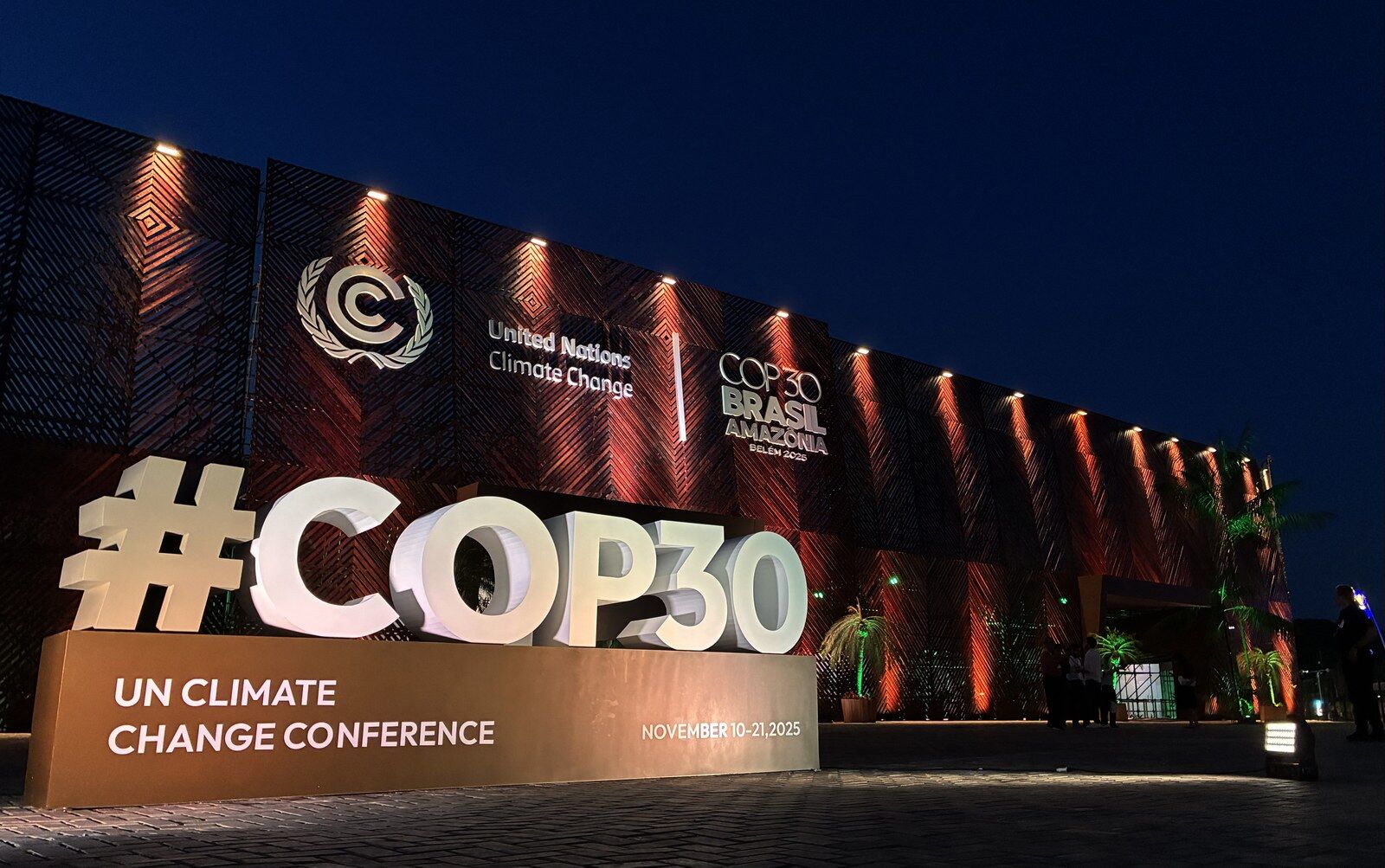
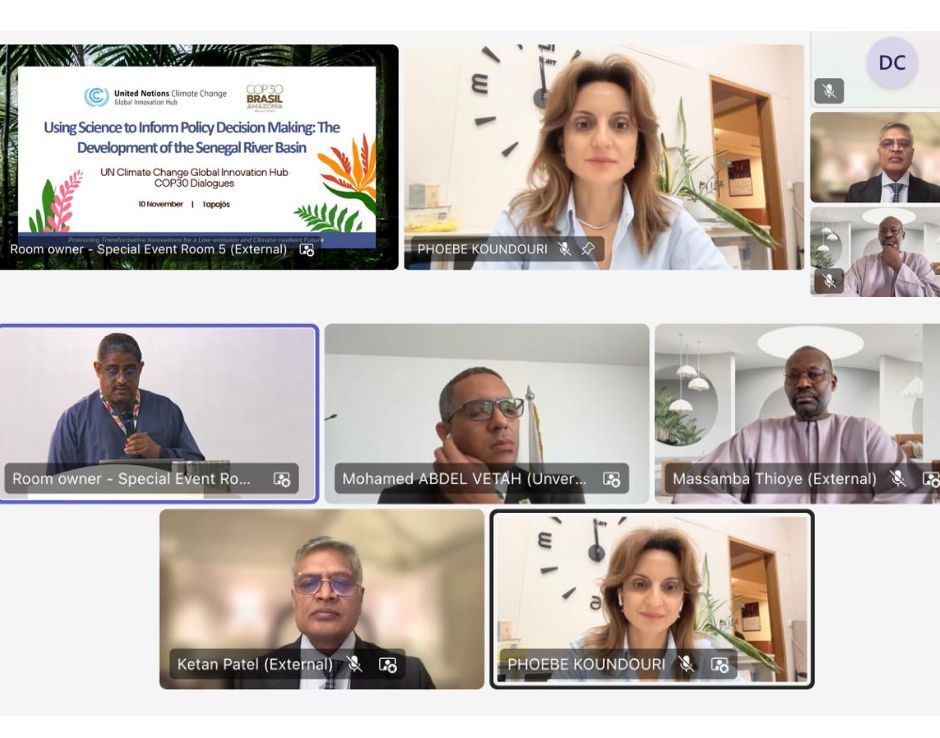
On 10/11, during the high-level panel “Using Science to Inform Policy Decision-Making: The Development of the Senegal River Basin,” part of the UNFCCC Global Innovation Hub COP30 Dialogues in the Blue Zone, Prof. Phoebe Koundouri discussed how digital twin technologies can advance science-based, data-driven, and collaborative decision-making for the sustainable development of the Senegal River Basin—one of West Africa’s most important transboundary ecosystems.
This dialogue builds on the progress achieved through the OMVS Systemic Innovation Workshop in Dakar, which continued the initiative launched in Athens (September 4–5, 2025) by the UN SDSN Global Climate Hub, with support from AE4RIA – Alliance of Excellence for Research and Innovation on Αephoria, in collaboration with the UNFCCC Global Innovation Hub.
From Athens to Dakar and now to Belém, this ongoing initiative exemplifies how systemic innovation, digital transformation, and scientific collaboration can converge to co-design a Digital Twin of the Senegal River Basin—a living, dynamic model for the integrated management of water, energy, food, and ecosystems under climate uncertainty.
Prof. Koundouri joined a distinguished panel moderated by Mr. Niokhor Ndour, Secretary General of OMVS, alongside Ketan Patel, Chair, Force for Good; Marieke Hood, Executive Director Impact, GESDA; Alex Antonelli, Director of Science, Royal Botanic Gardens, Kew; Warīn Flores, Founder & PI, KINRAY HUB; and Massamba Thioye, Principal Advisor, UNFCCC.